

How to prepare for a new global scenario
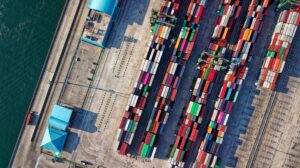
Port logistics is going through a decisive phase. As we approach 2026, the maritime and port sector is facing profound changes that will redefine the way goods are moved around the world. Digitalisation, sustainability, new regulations and greater customer demands are transforming international trade.
For companies specialising in port and maritime services such as International Ports and Shipping Services (IPSS), anticipating this new scenario means not only adapting, but also leading the change. Understanding which trends will shape the immediate future is key to offering efficient, secure logistics solutions that are aligned with the real needs of the market.
The port logistics sector is on the cusp of a new turning point. Looking ahead to 2026, international trade will continue to evolve in an environment marked by advanced digitalisation, regulatory pressure, sustainability and the need for increasingly resilient supply chains. For companies specialising in maritime and port services such as International Ports and Shipping Services (IPSS), anticipating these changes will be key to remaining a strategic partner for their customers.
More strategic and less predictable international trade
In recent years, companies have become aware that logistics efficiency is no longer measured solely in terms of costs. Reliability, responsiveness and diversification of routes and suppliers have become decisive factors.
By 2026, supply chains are expected to be more regionalised and strategic, combining global routes with logistics hubs close to end markets. This will increase the role of ports as coordination centres, not just as transit points for goods.
Companies operating in port environments will need to offer solutions that allow them to adapt quickly to geopolitical changes, trade restrictions or disruptions in international maritime flows.
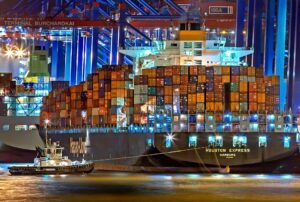
Advanced automation and digitisation Port logistics in 2026
La digitalización dará un paso más allá en 2026. Tecnologías como la automatización de procesos, el análisis predictivo de datos y la integración de plataformas digitales serán cada vez más habituales en la operativa portuaria.
El uso de sistemas que permitan anticipar congestiones, optimizar escalas de buques o prever incidencias documentales aportará una ventaja competitiva clara. Para los clientes, esto se traducirá en mayor visibilidad, reducción de riesgos y toma de decisiones basada en datos reales.
Las empresas de servicios marítimos y logísticos actuarán como facilitadores tecnológicos, conectando a navieras, autoridades portuarias, aduanas y operadores terrestres dentro de un mismo ecosistema digital.
Sostenibilidad como eje central de la operativa en logística portuaria en 2026
Digitisation will take another step forward in 2026. Technologies such as process automation, predictive data analysis and digital platform integration will become increasingly common in port operations.
The use of systems that enable congestion to be anticipated, ship calls to be optimised and documentary incidents to be predicted will provide a clear competitive advantage. For customers, this will translate into greater visibility, reduced risk and decision-making based on real data.
Maritime and logistics service companies will act as technological facilitators, connecting shipping companies, port authorities, customs and land operators within the same digital ecosystem.
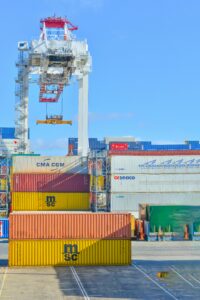
Sustainability as the cornerstone of operations
By 2026, sustainability will be a structural requirement for maritime transport and port logistics. Environmental regulations will continue to tighten, forcing companies to measure, reduce and justify their environmental impact.
Logistical optimisation — shorter waiting times, better cargo planning and more efficient routes — will be one of the main tools for reducing emissions. In addition, ports will continue to move towards greener models, with energy-efficient infrastructure and electrified processes.
Companies that integrate sustainability into their operational strategy will not only comply with regulations, but will also position themselves as key allies for customers committed to ESG criteria.
The value of local knowledge in a global market
Although logistics is global, port operations remain deeply local. In 2026, knowledge of each port’s specific environment, regulations, procedures and operational particularities will continue to be a differentiating factor.
Strategic ports such as Cadiz, Algeciras and Las Palmas will continue to strengthen their role as key hubs for international trade. Having a direct presence and experience in these locations will enable us to offer more agile and secure solutions, especially in complex operations or special projects.
The combination of global vision and local knowledge will be one of the main added values for customers seeking to minimise risks and optimise times.
Customisation and tailor-made services
In 2026, customers will demand logistics solutions that are fully adapted to their business. Standardisation will give way to modular and customised services that can be adjusted to different volumes, types of goods and destinations.
From customs management to multimodal transport, including storage and port coordination, the ability to design comprehensive solutions will be crucial. Operational flexibility will enable a rapid response to incidents, regulatory changes or peaks in demand.
Security, compliance and risk management
Increased regulation and controls in international trade will continue to raise operational complexity. By 2026, supply chain security and regulatory compliance will be critical aspects of any port operation.
Having logistics partners who are proficient in customs procedures, international documentation and the specific requirements of each type of goods will significantly reduce the risk of delays, penalties or unforeseen costs.
Experience, continuous training and technical expertise will be key elements in ensuring smooth and secure operations.
Prepare today for tomorrow’s success on Port logistics in 2026
The scenario for 2026 will require logistics companies to be more technological, sustainable and customer-oriented. Those that invest in knowledge, digitalisation and talent will be better prepared to face the challenges of international trade.
For International Ports and Shipping Services, the future lies in continuing to evolve alongside its customers, offering efficient, reliable port and maritime solutions adapted to a constantly changing global environment.
In a world where logistics is increasingly strategic, anticipation will be the key to continuing to connect markets successfully.
Conclusion about Port logistics in 2026
Looking ahead to 2026, port logistics will become a critical factor in the competitiveness of companies engaged in international trade. The combination of technology, sustainability, local knowledge and adaptability will mark the difference between those who react to change and those who lead it.
Companies such as International Ports and Shipping Services are called upon to play a fundamental role as trusted logistics partners, capable of offering comprehensive and customised solutions in an increasingly complex global environment. Preparing today is the best way to ensure efficient, safe and sustainable operations in the immediate future.